An Immersive Agricultural Science Experience for Teachers: From the Mountains to the Sea
Explore North Carolina agriculture. Experience science in action. Bring it back to your classroom.
Farm to Classroom is an immersive professional development program from NC State University Extension that helps educators use agriculture as a real-world context for teaching biology. Selected biology teachers will travel across North Carolina, engage with university researchers and agricultural professionals, participate in hands-on investigations, and leave with practical lessons, materials, connections, and ongoing support to integrate agricultural science for their students.
Connecting Biology to Agriculture in NC Classrooms
Farm to Classroom Educator Scholars will connect the science they already teach to authentic problems, technologies, and careers in agriculture. From genetics to climate change, and from soil microbiology to biotechnology, Farm to Classroom Educator Scholars will explore these connections on North Carolina farms, in research laboratories, and throughout the agricultural industry.
You do not need an agricultural background to participate. The program is designed to give educators the experiences, confidence, and resources they need to make those connections for their students.
Farm to Classroom Experience
Travel North Carolina from the Mountains to the Sea.
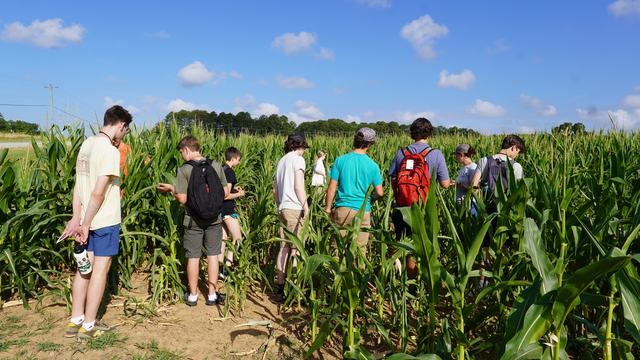
The high impact experience of Farm to Classroom is the Agricultural Literacy Backroads Tour, 2 immersive summer professional development experiences that takes teachers beyond the classroom and into the places where agricultural science happens.
From coastal agriculture and precision farming to plant genetics, soil health, biotechnology, pollinators, climate resilience, and specialty crops, teachers will see firsthand how science is being used to address real agricultural challenges.
Summer 2027 Experience: Agriculture in Eastern North Carolina
- Coastal Plains + Blacklands
- Explore the science behind crops such as sweet potatoes, cotton, peanuts, and potatoes while investigating topics including soil and nutrient management, plant breeding, precision agriculture, local food systems, and the effects of a changing climate on coastal agriculture.
- Piedmont
- Visit NC State research facilities, agricultural businesses, farms, greenhouses, and urban agriculture projects. Explore agricultural technology, sustainable production, crop systems, and the growing role of innovation and entrepreneurship in agriculture.
Summer 2028 Experience: Agriculture in Western North Carolina
- Mountains & Foothills
- Experience mountain agriculture through orchards, specialty crop farms, research facilities, vineyards, nurseries, and other agricultural enterprises. Topics may include soil conservation, pollinators, plant genomics, biotechnology, sustainable production, and climate resilience.
Full Schedule Coming Soon!
Learn It. Try It. Teach It.
Farm to Classroom Educator Scholars will explore ways to connect immersion activities directly to Next Generation Science Standards, North Carolina science standards and classroom learning. Activities may explore essential questions such as:
- How do plants respond to saltwater intrusion?
- How does genetics shape the food we grow?
- What is happening beneath our feet?
- How can technology help farmers make decisions?
- How do plants, insects, and microorganisms interact?
The goal is not to add another unit to an already crowded curriculum. Instead, you identify places where agriculture can make the science you already teach more relevant, engaging, and critically connected to the real world.
What You’ll Take Back to Your Classroom
The summer experience is only the beginning. Farm to Classroom participants will receive a stipend, resources, and continued support to turn what they learn into classroom experiences for their students. Costs associated with the Farm to Classroom Educator Scholar experience are covered by the USDA-funded grant.
- Classroom-Ready Resources
- Teachers will have access to a growing collection of lessons, laboratory activities, investigations, and teaching resources connecting agricultural science with biology and other science standards. Supplies used in selected hands-on activities will also be provided to help teachers implement activities with their own students.
- Grow Boxes
- Throughout the program, teachers will receive Grow Boxes connected to virtual professional development experiences. Each box will contain materials needed to investigate an agricultural science topic with students.
- Your Own Classroom Project
- Every participating teacher will put learning into action by implementing an agricultural activity or project with students. That might include:
- A classroom laboratory investigation
- A student research project
- A school garden
- A field experience
- An agricultural technology investigation
- A unit connecting agriculture with biology or environmental science
- Every participating teacher will put learning into action by implementing an agricultural activity or project with students. That might include:
- A Community of Educators, Scientists, and Agricultural Professionals
- One of the most important parts of Farm to Classroom is the network you build. Educators will be connected with a mentor who can help identify resources, answer questions, make connections with subject-matter experts, and support the transition from the summer experience to classroom implementation.
- Participants will also join regular virtual Learning Community Conversations with other educators and the Farm to Classroom team to provide a place to exchange ideas, troubleshoot challenges, share classroom successes, and continue learning together.
- Share What You Grow
- Participants will have an opportunity to come together at NC State for an Agricultural Literacy Showcase. Educators will showcase how they adapted agricultural science for their students, highlight projects and lessons that worked well, and learn from other educators participating in the program. The showcase is designed to celebrate what educators and students have accomplished while building a collection of ideas that can inspire classrooms across North Carolina and beyond.
Who Should Apply?
Farm to Classroom is designed for current North Carolina high school biology educators.
Educators teaching environmental science and other courses with strong connections to plant, environmental, or other sciences may also be a good fit.
You do not need previous agricultural experience.
Farm to Classroom Educator Scholars:
- Want to make science more relevant through real-world examples
- Are curious about agriculture, food systems, plant science, or agricultural technology
- Enjoy hands-on and experiential learning
- Want to introduce students to new STEM and agricultural career pathways
- Are willing to implement at least one agricultural learning experience with their students
- Want to collaborate with educators from across the state
- Can participate in the summer experience and continued learning community
Priority consideration may be given to educators serving public schools and communities with fewer resources or limited access to agricultural and STEM learning opportunities.
Time Commitment
Farm to Classroom is designed as an ongoing professional learning experience rather than a single workshop. Participants should be prepared to:
- Travel, learn, investigate, and collaborate with other educators during the Agricultural Literacy Backroads Tour.
- Summer 2027-2028 cohort are June 22-24, 2027 (Central and Eastern, NC and August 3-5th, 2027 (Foothills and Western NC).
- Learning Community Conversations Participate in virtual conversations and professional development opportunities throughout the school year.
- Work with a mentor Connect with a member of the Farm to Classroom team for individualized support.
- Bring agriculture into your classroom Implement an agricultural lesson, investigation, project, or experience with your students.
- Agricultural Literacy Showcase Reflect on what you learn and contribute ideas and outcomes to the Farm to Classroom community.
Additional information about participant stipends, travel arrangements, lodging, professional development credit, and other program support will be provided with each application cycle.
Ready to become a Farm to Classroom Educator Scholar? Apply Now!
Come explore the farms, laboratories, research stations, businesses, people, and ideas shaping the future of agriculture and then bring those experiences home to your students.
Questions? Reach out to Liz Driscol at eadrisco@ncsu.edu or Mia Sullivan at mcsulli8@ncsu.edu.